Browse reusable scenario patterns and real project outcomes with deployment context, measurable impact, and evidence formats to benchmark your own roadmap.
Leading Commercial Vehicle Manufacturer: Full-Plant Logistics Automation Program
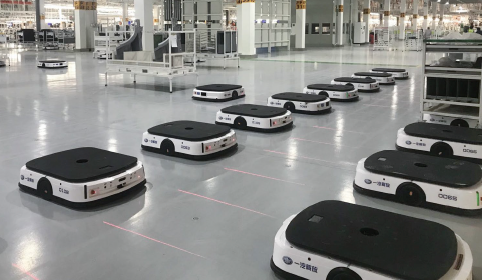
A full-plant logistics automation program was implemented for a leading commercial vehicle manufacturer as part of its J7 smart vehicle plant development. Built on digital, networked, and intelligent manufacturing technologies, the project established an industry-leading smart operations model with 100% data-controlled quality processes, 100% unmanned logistics line-feeding, and 100% visualized operation of core KPIs. As the first full-vehicle logistics automation project in the commercial vehicle OEM sector, the program deployed approximately 300 AMRs to support automated inbound storage, automated line feeding for large and small parts, goods-to-person picking and automatic line feeding for standard parts, SPS automatic follow-sequencing, automatic wheel-cover nut line feeding integrated with production lines, cross-floor automated transport, and intelligent management of empty containers across the plant.
Leading Relay Manufacturer: Multi-Floor Factory Intralogistics and Distribution Automation Program
A multi-floor intralogistics and distribution automation program was implemented for a leading relay manufacturer to support intelligent warehousing and kitting-related internal logistics across its production campus. Deployed in two phases with nearly 100 FMRs, the project covered receiving, storage, transfer, and outbound handling for raw materials, components, semi-finished goods, and finished products, while enabling cross-floor delivery through lifts and elevators across multiple plant areas.
FMRs deployed: nearly 100Deployment phases: 2Covers raw materialsCovers componentsCovers semi-finished goodsCovers finished goodsSupports cross-floor deliveryIntegrated with lifts and elevatorsIntegrated with air-shower doors and automatic doorsIntegrated with customer WMS
Leading Duty-Free Travel Retail Group: Multi-Site Smart Warehouse Automation Program
A multi-site smart warehouse automation program was implemented for a leading duty-free travel retail group to support both offline airport duty-free store orders and fast-growing online e-commerce demand. The program covered bonded, central, and external warehouse operations across multiple sites and categories, including cosmetics, apparel, bags, food, beverages, and luxury goods, enabling more scalable, intelligent, and flexible warehouse fulfillment.
Leading Apparel Brand: Cross-Floor Goods-to-Person Warehouse Automation Upgrade
A cross-floor goods-to-person warehouse automation upgrade was implemented for a leading apparel brand to support both B2B and B2C operations. The project automated warehouse picking, reduced labor input, and improved operational efficiency through dense storage, cross-floor workflow design, and integrated AMR-based goods-to-person handling.
Pharmaceutical Distribution / Cold Chain Logistics / Warehouse Automation
Leading Pharmaceutical Distributor: Smart Logistics Center Automation Program
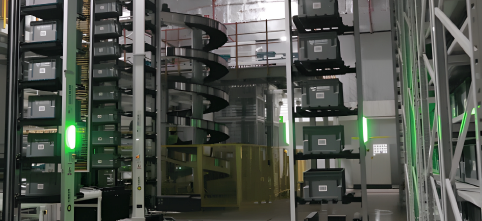
A smart logistics center automation program was implemented for a leading pharmaceutical distributor to support highly automated and intelligent warehouse operations. The project integrated multiple advanced systems and equipment, including high-density four-way shuttle storage, lifts, high-speed sortation, robotic arms, mobile robots, and multi-side vision scanning, creating a flexible logistics platform for pharmaceutical distribution and store-replenishment operations.
Mobile robots deployed: 60+Covers ambient split-case pickingCovers cold-storage split-case pickingCovers ambient full-case handlingBin-to-person throughput: 900+ boxes/hourPeak business capacity: 1,000+ lines/hourSupports four-way shuttle plus latent robot workflowSupports automated inbound and outbound for whole-case and split-case operations
Pharmaceutical logisticsDistribution center automationCold chain logisticsCTUFour-way shuttleGoods-to-personPiece pickingWhole-case handlingVision scanning
Leading Copper Foil Manufacturer: Automated Workshop Material Handling Program
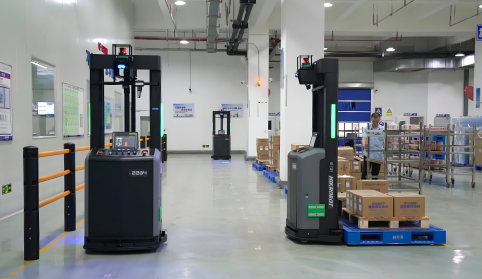
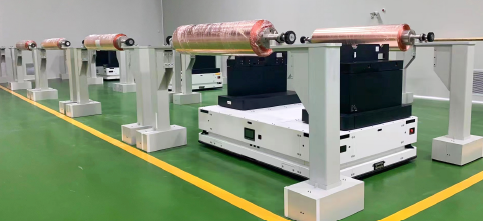
A material handling automation program was deployed in a newly built copper foil production workshop for a leading metals and advanced materials manufacturer. The project introduced heavy-duty AMRs and customized high-precision lifting robots to support copper foil unloading and transfer operations, while enabling coordinated docking with production equipment and supporting facilities across the workshop.
Covers copper foil unloadingCovers copper foil transferSupports docking with buffer racksSupports docking with automatic doorsSupports docking with air-shower doorsSupports docking with liftsCovers unpacking, storage, delivery, and off-line storage
Leading Intelligent Equipment Manufacturer: Smart Factory Intralogistics Automation Program
A smart factory intralogistics automation program was implemented for a leading intelligent equipment manufacturer to support fully automated production from sheet-material inbound to finished-goods off-line. The project covered automated transport across cutting, blanking, material delivery, part picking, and welding operations, helping build a benchmark intelligent manufacturing facility with more connected and efficient material flow.
Covers sheet-material inboundCovers cutting operationsCovers blanking operationsCovers material deliveryCovers part pickingCovers welding operationsSupports inbound managementSupports outbound managementSupports inventory managementSupports QR code and SLAM navigation switching
Smart factoryIndustrial manufacturingIntralogistics automationAMRMaterial deliveryWelding line dockingProduction line transferSLAM & QR navigationWarehouse management integration
Battery Manufacturing / Smart Factory Logistics
Leading Lithium Battery Manufacturer: Battery Plant Intralogistics Automation Program
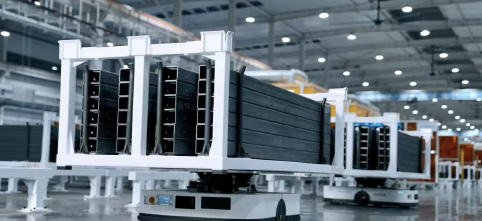
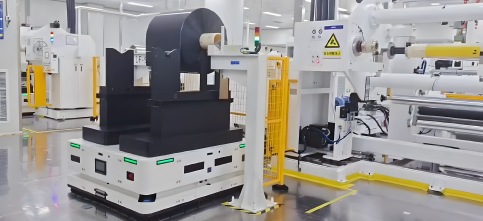
A comprehensive AMR-based intralogistics automation program was deployed in a battery manufacturing plant covering electrode sheet production, cell assembly, and cell testing workshops for consumer battery operations. The project introduced multiple AMR types, including latent AMRs, heavy-duty AMRs, forklift AMRs, and CTUs, to optimize material flow and support automated loading, unloading, transfer, and storage coordination across production processes.
Battery manufacturingConsumer battery productionHeavy-duty AMRForklift AMR / FMRCTUElectrode roll handlingAutomated loading and unloadingSmart factory intralogisticsMaterial control system
Leading Consumer Electronics Manufacturer: Smart Warehousing and Lean Intralogistics Program
A smart warehousing and lean intralogistics program was implemented for a leading consumer electronics manufacturer to drive end-to-end cost reduction and efficiency improvement across its manufacturing campus. Built on intelligent warehousing technologies and lean logistics IT principles, the project established a unified logistics platform, broke down operational silos across departments, and improved logistics models, routing layouts, and process flows.
Labor intensity before project: approx. 20,000 steps/dayShifted to goods-to-person picking modeCovered multi-warehouse coordination
Leading Smart EV Manufacturer: Stamping Workshop Automation Upgrade
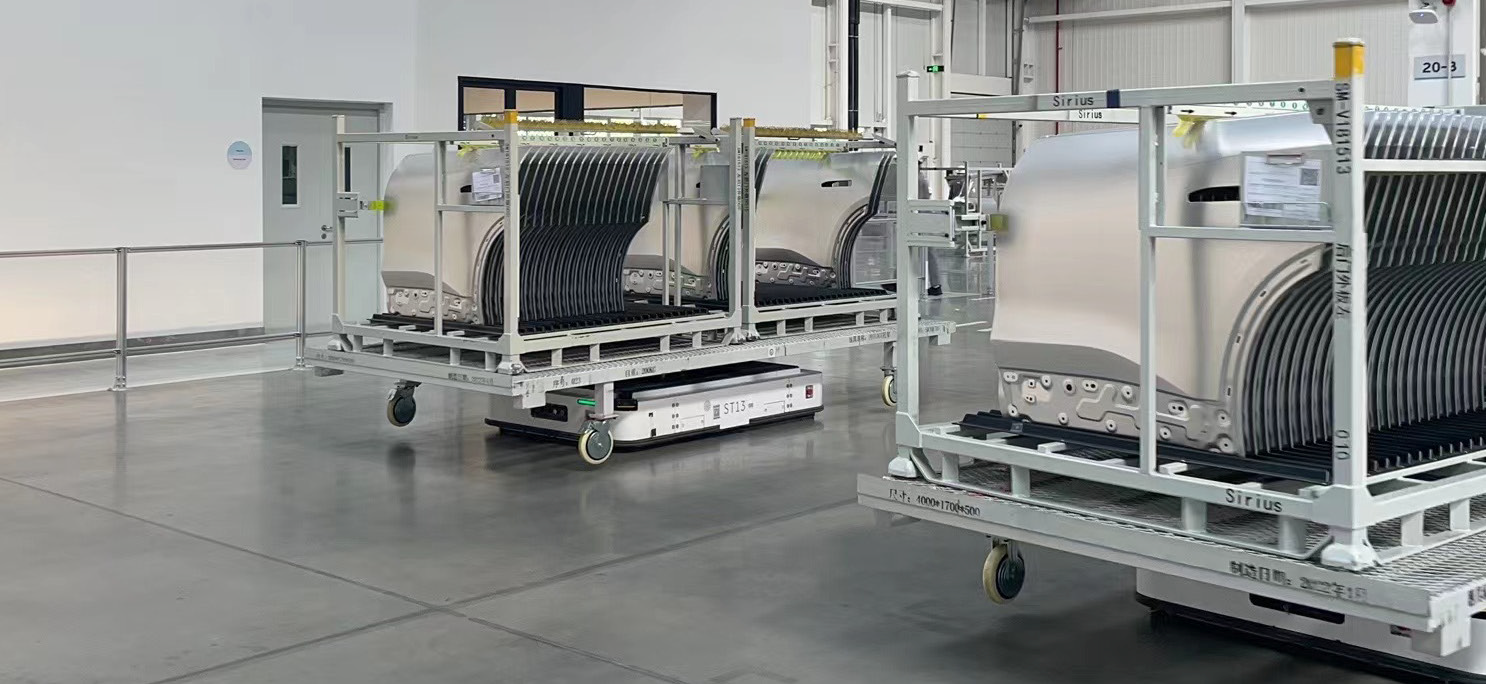
An automation solution was deployed in the stamping workshop of a leading smart EV manufacturer. By integrating warehouse management and robot scheduling platforms with upper-level execution systems, the project enabled automated press-part offloading, automated body-part delivery, automated final-assembly part delivery, SPS delivery, and EDS intelligent material handling, reducing manual intervention while improving safety, delivery efficiency, and digital visibility across intralogistics operations.
Integrated with upper-level execution systemsAutomated press-part offloadingAutomated body-part deliveryAutomated final-assembly part deliverySPS deliveryEDS intelligent material handling
Leading Express Operator in Chile: From Manual Sorting to High-Efficiency Automation
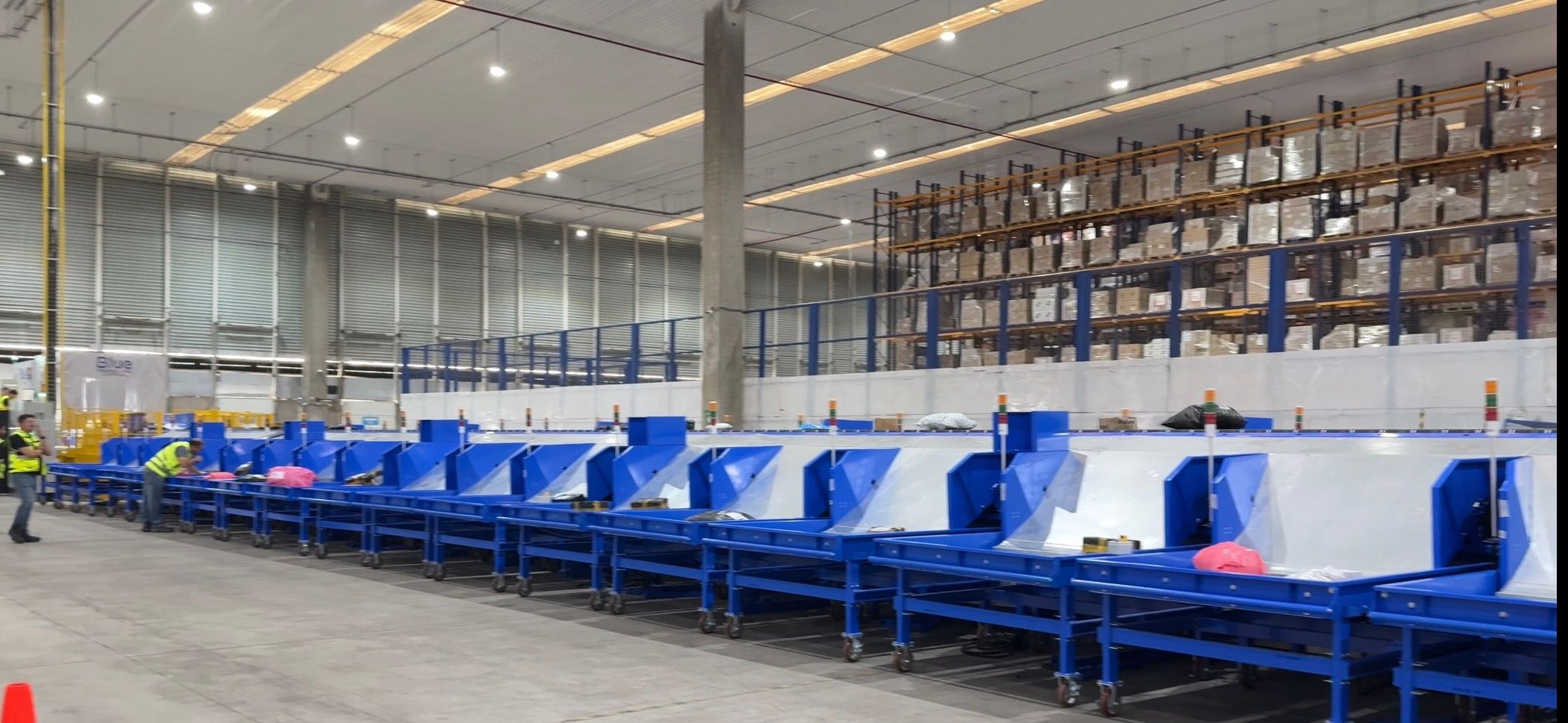
Delivered a narrow belt sortation system in Chile from zero to one, helping a leading Express Operator transition from manual sorting to stable, scalable, and high-throughput automated operations.
Leading Children’s Apparel Brand: Returns Warehouse Goods-to-Person Upgrade
A goods-to-person solution was deployed for the returns warehouse of a leading children’s apparel brand to address broad SKU variety, strong seasonality, and significant order fluctuations during promotional periods. The project improved storage density, turnover efficiency, and flexible warehouse management through a more intelligent and space-efficient operating model.
Warehouse area: 8,000 sqmRobots deployed: 75Storage locations: nearly 40,000SKU count: hundreds of thousandsPeak order growth during promotions: 2–3xVertical storage deployment
Goods-to-personAMRApparel logisticsBin-to-personHigh-density storagePeak season operationsSmart warehousing
Need a tailored view for your site?
Send Your Baseline, We Map the Closest Case Pattern
Share your route matrix, load profile, and KPI target. We'll map reference cases and propose the next validation steps.